Helmets, Visors, and Night Vision: What Actually Saves Your Head
Helmet classes, ricochet, ear coverage trade-offs, and NVG mounting.
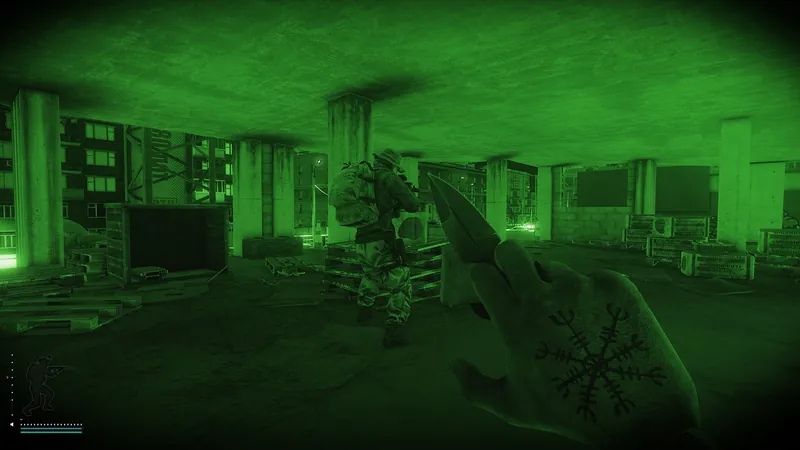
The decision first
Check top, nape, ears, eyes, and jaw coverage.
- Check top, nape, ears, eyes, and jaw coverage.
- Helmet shells in the snapshot reach class five.
- Visors have their own protection classes.
- Ricochet is separate from guaranteed protection.
- High-cut helmets trade ear coverage for headset compatibility.
- Night vision requires compatible mounts.
Why your head keeps ending your raids
Most deaths in Escape from Tarkov are headshots, and most headshots land on players wearing the wrong helmet for the fight they walked into.
You can run the best body armor money buys and still die instantly to a single bullet, because armor plates cover your thorax and stomach while your skull sits exposed above them. Tarkov models the head as a set of separate hit zones, and a helmet only protects the zones it actually covers. Buying a class 4 high-cut helmet and then catching a bullet in the ear is the same outcome as wearing nothing at all.
This guide exists to fix that. It explains how helmet protection is calculated, what coverage zones and ricochet chance really do, when a visor is worth its weight, and how to mount night vision without giving up ear protection. By the end you will know exactly which helmet to buy at each stage of a wipe and why.
Everything here was verified against Patch 1.1.5.0, the current build of Season 1 as of September 2026. Helmet stats, trader stock, and the occasional mechanic shift between balance patches, so treat the specific numbers as a dated snapshot rather than eternal law and re-check item cards in game after any major update.
At a glance: the short answer
If you only remember one screen of this guide, make it this one.
Helmets in Tarkov top out at class 5; there is no class 6 helmet in the game. Class alone is not the decision, though. The three stats that decide whether a helmet saves you are which head zones it covers, its ricochet chance, and whether it muffles your hearing.
The practical answer for most players: run a cheap class 3 helmet with ear coverage early, move to a modular class 4 high-cut once you can afford attachments, and reserve the heavy class 5 steel for close-quarters maps where eating a rifle round to the skull is a realistic plan.
Action checklist
- No helmet exceeds class 5; only the Maska-1SCh visor reaches class 6 face protection.
- Ear coverage stops ear shots; high-cut helmets trade that away for headset compatibility.
- Ricochet chance can deflect shallow-angle hits regardless of penetration math.
- Visors protect face, eyes, and jaw, and most of them shorten flashbang blindness.
- Night vision and thermal optics need a helmet mount such as the Wilcox L4G24 or Norotos TATM.
- Ragman is your main helmet vendor; his stock deepens as his loyalty level rises.
| Stage | Helmet family | What you get | What you give up |
|---|---|---|---|
| Early wipe | 6B47 Ratnik-BSh / SSh-68 | Class 3 with ear coverage | No visor or NVG options |
| Mid wipe | FAST MT / AirFrame / EXFIL | Class 4, modular rails and mounts | Open ears unless you add covers |
| Late wipe CQB | Altyn / Rys-T / Vulkan-5 | Class 5 shell plus class 5 visor | Heavy, strong sound reduction |
| Face-tank build | Maska-1SCh | The only class 6 visor in the game | Class 4 shell, muffled hearing |
How helmet protection is actually calculated
When a bullet strikes armor, Tarkov does not compare two numbers and declare a winner. It rolls dice. The penetration chance is computed from three inputs: the armor class of the zone hit, the percentage of durability that armor has left, and the penetration value of the incoming round. The same bullet against the same helmet can penetrate on one raid and fail on the next.
Two consequences follow. First, a fresh helmet is meaningfully stronger than a battered one, because remaining durability percentage feeds directly into the roll. Second, no class makes you immune; it only shifts the odds. The official effectiveness scale runs from pointless (never penetrates in practice) up to basically ignores the armor (over 80 percent initial pen chance), and mid-tier rifle ammo sits in the effective range against mid-tier helmets, meaning penetration within a handful of hits.
When a round fails to penetrate, you still take a small amount of blunt damage scaled from the armor, the bullet, and remaining durability. It rarely decides a fight on its own, but it is why you sometimes survive a stopped headshot with a concussion instead of walking away clean. Every hit, penetrated or not, also costs the armor at least 1 point of durability, so helmets degrade fast under fire.
Coverage zones: the stat everyone skips
The class number is the least interesting line on a helmet's item card.
Tarkov splits the head into discrete zones: the top of the head, the nape, the ears, the face, the eyes, the jaw, and the throat. A helmet only rolls its protection when the impact lands on a zone it covers. This is why two helmets of identical class can perform completely differently in the same firefight.
Full-coverage designs like the Altyn, Maska-1SCh, and 6B47 wrap the top, nape, and ears in one shell. High-cut helmets like the Ops-Core FAST MT, Crye AirFrame, and Team Wendy EXFIL only protect the top and nape, leaving the ears, face, and jaw open by default. The high-cut designs are not worse; they are platforms. Their open zones are where attachments live.
The eyes and jaw deserve special attention because almost no helmet shell covers them natively. Eye and jaw protection comes almost exclusively from visors and face shields, which bolt onto compatible helmets. If you keep dying to face shots, the fix is not a higher class helmet, it is a visor.
Ricochet chance: the hidden second layer of defense
Separate from the penetration roll, helmets carry a ricochet stat. When a round arrives at a shallow enough angle, the helmet can deflect it entirely, skipping the penetration calculation altogether. A successful ricochet means the shot simply does not count, no matter how good the attacker's ammo is.
You cannot aim for ricochets and you cannot build around them, but you can buy them. Different helmet models ship with different ricochet ratings, and two helmets of the same class and coverage can differ here. Over hundreds of raids, a helmet with a high ricochet chance quietly saves your life a handful of times that a lower-rated shell would not.
The lesson is to read the full item card, not just the class. A class 3 helmet with strong ricochet odds is often a better field choice than a class 4 helmet with poor ones, especially early in a wipe when the rounds flying at your head are cheap pistol and shotgun loads that class 3 stops outright.
Sound reduction and the headset trade-off
In Tarkov, information wins fights before bullets do, and your helmet controls how much you hear.
Heavy helmets carry a sound reduction property that muffles ambient audio. An Altyn or Maska makes you substantially harder to kill and substantially easier to sneak up on. Footsteps, reloads, and door sounds all arrive dulled, and in a game where hearing a flank three seconds early is often the whole fight, that is a real cost.
This is the mechanical reason high-cut helmets dominate experienced play. Because the FAST MT, AirFrame, and EXFIL leave the ears physically open, you can wear a tactical headset underneath and keep amplified hearing while still carrying class 4 protection on the top and nape. Ear-coverage helmets physically block that slot on most setups.
The decision tree is simple. If you play slow, hold angles, and fight at range, muffled hearing costs you little and heavy steel is fine. If you push buildings, clear dorms, or hunt other PMCs in close quarters, hearing is survival, and a high-cut helmet with a headset beats two extra classes of deafness.
Classes 1 to 3: the early-wipe workhorses
Low-class helmets exist to stop pistol rounds, shotgun pellets, and fragments, and they do that job well for almost no money.
The 6B47 Ratnik-BSh is the standard recommendation for a reason. It is class 3, covers the top, nape, and ears, and is cheap and easy to find. The SSh-68 steel helmet does the same job with slightly more durability. Community consensus holds both as cheap; exact market prices move constantly and are not verified here, so check Ragman and the flea before each raid rather than trusting any fixed ruble figure from any guide, including this one.
Class 1 and 2 options like the Tac-Kek FAST MT replica and the Kolpak-1S riot helmet are mostly scav-tier filler. The Kolpak does cover ears and its strong sound reduction can even feel like a feature on Factory, but against anything firing rifle ammunition these shells are cosmetic confidence.
One outlier in this bracket is the DevTac Ronin: class 3, but with native coverage of top, nape, ears, eyes, jaw, and face plus a huge 180 durability pool. It will not stop rifle fire, but against buckshot and pistols it protects more of your head than almost anything else in the game.
| Class | Helmet | Durability | Covers |
|---|---|---|---|
| 1 | Tac-Kek FAST MT (Replica) | 48 | Top, nape |
| 2 | Kolpak-1S riot helmet | 45 | Top, nape, ears |
| 2 | PSh-97 DJETA | 156 | Top, nape, ears, face, eyes |
| 3 | 6B47 Ratnik-BSh | 45 | Top, nape, ears |
| 3 | SSh-68 steel helmet | 54 | Top, nape, ears |
| 3 | DevTac Ronin | 180 | Top, nape, ears, eyes, jaw, face |
Class 4: the modular middle ground
Class 4 is where helmets split into two philosophies. The high-cut trio of the Ops-Core FAST MT, Crye AirFrame, and Team Wendy EXFIL protects only the top and nape, but accepts visors, ear covers, and night-vision mounts. The HighCom ULACH goes the other way, wrapping the ears into the shell for class 4 protection across top, nape, and ears with no modularity.
The Maska-1SCh sits in this class too, and it is arguably the most interesting helmet in the game. The shell itself is class 4 with ear coverage and 108 durability, but it accepts the only class 6 face shield in Tarkov. A Maska with its visor down gives you a class 4 skull and a class 6 face, a combination nothing else replicates.
For most mid-wipe raids, a high-cut class 4 with a headset is the sweet spot: enough class to shrug off common mid-tier rounds on a lucky roll, open ears for audio, and rails for a visor or NVG mount when the raid calls for it. Just remember what you left uncovered every time you peek a corner face-first.
| Helmet | Durability | Covers | Notes |
|---|---|---|---|
| Ops-Core FAST MT | 48 | Top, nape | Takes visor and ear covers |
| Crye AirFrame | 48 | Top, nape | Modular platform |
| Team Wendy EXFIL | 54 | Top, nape | Takes visor |
| HighCom ULACH | 66 | Top, nape, ears | Class 4 with ear coverage |
| Maska-1SCh | 108 | Top, nape, ears | Accepts the class 6 visor |
Class 5: heavy steel for close quarters
Three helmets sit at the top of the class ladder: the Altyn, the Rys-T, and the Vulkan-5 (LShZ-5). All three are class 5, all three cover the top, nape, and ears, and the Altyn and Rys-T each pair with a matching class 5 face shield. This is the closest Tarkov comes to a walking pillbox.
Class 5 genuinely changes the math against mid-tier ammunition. Rounds that slice through class 3 on the first hit drop into the dice-roll territory against class 5, and budget ammo bounces outright. Top-tier armor-piercing loads still go through, because no helmet reaches class 6, but a large share of the server is not shooting top-tier ammo at you.
The cost is weight and hearing. These are heavy shells with strong sound reduction, and both the Altyn and Rys-T visors narrow your awareness further. Bring them to maps where the fights are forced at short range, dorms on Customs or the Interchange mall, where hearing matters less because everyone is already in the same room. Do not bring them to Woods and expect to hear the bush that kills you.
| Helmet | Durability | Covers | Visor |
|---|---|---|---|
| Altyn | 81 | Top, nape, ears | Class 5 faceshield |
| Rys-T | 90 | Top, nape, ears | Class 5 faceshield |
| Vulkan-5 (LShZ-5) | 75 | Top, nape, ears | Heavy class 5 shell |
Visors and face shields: protecting the money shot
Face, eyes, and jaw are the three zones helmet shells almost never cover, and visors are the only fix.
Visors bolt onto compatible helmets and add their own armor class to the face, eye, and jaw zones, spanning class 2 at the bottom to class 6 at the very top. The ladder runs from the FAST visor at class 2, through the Ops-Core multi-hit visor at class 3 and the LShZ-2DTM at class 4, up to the Altyn faceshield at class 5 and the Maska-1SCh faceshield alone at class 6.
A visor has a second job most players never notice: most face shields shorten flashbang blindness and cut glare. If you fight indoors where grenades are constant, a visor is optical equipment as much as armor.
Which visor you can run is dictated by the helmet. High-cut platforms accept the class 2 and 3 options. The Altyn and Rys-T take their class 5 shields. The Maska-1SCh is the only carrier of the class 6 shield, which is why it stays relevant despite its class 4 shell. Match the visor to the helmet before you buy either; a faceshield that does not fit your shell is expensive loot for someone else.
| Visor | Class | Mounts on |
|---|---|---|
| FAST visor | 2 | High-cut helmets |
| Ops-Core multi-hit visor | 3 | High-cut helmets |
| LShZ-2DTM | 4 | Compatible heavy helmets |
| Altyn faceshield | 5 | Altyn |
| Maska-1SCh faceshield | 6 | Maska-1SCh only |
Materials, durability, and repair
Armor material determines how fast a piece dies. Every material has a hidden destructibility coefficient, and a piece's effective durability is its listed durability divided by that coefficient. The same 60 points of durability lasts wildly different lengths of real gunfire depending on what the helmet or visor is made of.
The number that matters most here belongs to glass. Face shields use it, and glass carries a destructibility of 0.6, the same fragility as ceramic plates. A visor soaks its first few hits well and then falls apart, and it does not repair gracefully. Treat visors as consumables: budget for a replacement, not a repair, after any raid where it actually caught something.
For helmet shells the spread is gentler, but the logic is the same as plates: a fresh helmet rolls better penetration odds than a chewed one, and some materials survive workshop repairs far better than others. Before you insure a helmet for the tenth time, check its remaining maximum durability; a shell that has been repaired into the ground is a fashion statement, not protection.
Night vision and thermal: mounts decide everything
Night raids are free loot for players who can see, and the gate is not the optic, it is the mount.
Night-vision devices and thermal goggles do not attach to your face. They attach to a mount, and the mount attaches to a helmet. The Wilcox L4G24 and Norotos TATM are the standard helmet mounts, and high-cut helmets like the FAST MT are the usual hosts. Plan the chain backwards: pick the NVG, then the mount that carries it, then the helmet that takes the mount. An unsupported standalone head mount exists, but helmet mounting is the norm for anyone also wearing armor on their skull.
The device ladder starts with cheap Russian units like the PNV-57E and PNV-10T, which work but give you a poor field of view. The Armasight N-15 and the L3Harris AN/PVS-14 are the mid-tier monocular options, while the PVS-31A binoculars and the panoramic GPNVG-18 sit at the top. The T-7 thermal goggles ride a night-vision mount and see heat rather than amplifying light, which makes them the strongest detection tool in a dark raid.
The synergy with the rest of this guide is the point: a high-cut class 4 helmet carries your NVG mount in front and leaves your ears open for a headset, giving you sight and sound at night while keeping class 4 on the skull. That combination is why experienced players night-raid in high-cuts rather than in heavy ear-covering steel.
| Device | Type |
|---|---|
| PNV-57E / PNV-10T | Budget NVG, narrow view |
| Armasight N-15 | Night-vision monocular |
| L3Harris AN/PVS-14 | Monocular NVG |
| L3Harris PVS-31A / GPNVG-18 | High-end binocular / panoramic NVG |
| T-7 Thermal Goggles | Thermal optic on an NVG mount |
Building your headgear by progression stage
Early wipe, your enemies shoot pistols, shotguns, and whatever loose rifle ammo they found in a crate. A class 3 helmet with ear coverage, the 6B47 or SSh-68, stops nearly all of it and costs almost nothing. This is the highest-value armor purchase in the game relative to its price, and skipping it to save money is the single most common beginner error.
Mid wipe, the server upgrades to mid-tier rifle ammunition and your class 3 starts losing rolls. Move to a high-cut class 4 with a headset, and add a class 2 or 3 visor for indoor maps where face shots and flashbangs are the threats that actually kill you. This is also the point where an NVG mount turns the same helmet into your night-raid platform.
Late wipe, money is no longer the constraint and ammunition is genuinely lethal, so the question becomes matchup-specific. Heavy class 5 with a faceshield for forced close-quarters maps, high-cut class 4 with NVGs for night work, and a Maska-1SCh when you want the only class 6 face in the game. None of these makes you safe against top-tier AP; they buy you dice rolls and time, which in Tarkov is usually the same thing as survival.
Boss helmets worth hunting
Some of the best headgear in the game walks around on a boss's head, and killing the owner is a legitimate acquisition strategy.
Killa, the solo boss of Interchange, wears his own signature version of the Maska-1SCh helmet with its faceshield, alongside his Killa-variant 6B13 M armor and an RPK-16. He spawns around the IDEA, OLI, and Goshan stores and the central mall shops, and he has no guards, but his volume of fire makes him one of the harder fights for newer players. Go for headshots or leg damage, use cover and grenades, and respect the close-range spray.
The helmet is not just a trophy. Jaeger's quest The Huntsman Path - Sellout requires you to kill Killa and hand over his helmet, so the first one you loot has a quest waiting on it. After that, Killa's maska is one of the few renewable class 6 face-protection sources in the game.
Other bosses wear distinctive headgear too, from Tagilla's welding mask to Knight's Death Knight mask on the Goons squad. Treat boss helmets as trophies and quest items first and meta equipment second; the reliable path to good headgear is still Ragman and the flea, not farming a boss who might not spawn.
Where to buy: Ragman, loyalty, and the flea
Ragman is the gear trader, and head armor sits squarely in his inventory alongside armor vests, rigs, and backpacks. He is available from the start, no unlock quest needed, but his stock is gated by loyalty level, and the good helmets live behind the higher tiers.
Since the 1.1.0.0 rework, trader loyalty no longer requires any spending threshold. Leveling Ragman now takes only two things: your character level and your reputation with him, which you earn by running his quests. If an older guide tells you to burn millions of rubles at Ragman to level him, that guide predates the rework.
The flea market unlocks at PMC level 15 and fills the gaps in trader stock, letting you buy specific helmets and mounts other players have looted. Prices there float with supply and demand and are not quoted anywhere in this guide for exactly that reason: any ruble number printed today is wrong within weeks. Compare in game before you commit.
| Ragman loyalty | Character level | Reputation |
|---|---|---|
| LL2 | 12 | 0.50 |
| LL3 | 27 | 2.00 |
| LL4 | 42 | 6.50 |
Common helmet mistakes to stop making
Most helmet losses are self-inflicted. Run this list against your current loadout.
The through-line of every mistake below is buying a number instead of a system. Class, coverage, ricochet, hearing, and attachments are one decision, and the players who die with class 5 on their skull usually optimized one line of the item card and ignored the other four.
Action checklist
- Wearing a high-cut helmet with nothing in the open ear and face slots, taking on all the exposure with none of the utility.
- Trusting class alone: a class 4 helmet that leaves your jaw open will not save you from the face shot that actually arrives.
- Running heavy ear-covering steel and then blaming the game for the flank you could not hear.
- Forgetting that visors are glass and break fast, then assuming a raid-worn faceshield still has its listed protection.
- Buying an NVG device without checking the mount and helmet chain first.
- Skipping a cheap class 3 helmet early because it feels pointless; against early-wipe ammunition it is the best ruble-to-survival ratio on your body.
- Insuring a helmet that has been repaired down to a fraction of its original maximum durability.
Expected outcome and what to read next
If you apply this guide, your deaths should visibly change shape: fewer instant head-eyes screens from scav buckshot and pistol rounds, more raids where a stopped bullet or a ricochet gives you the second you needed, and a clear reason behind every helmet purchase instead of vibes. You will still die to headshots, because Tarkov, but they will be from ammunition that earned the kill.
Your immediate homework: check what your current helmet actually covers on its item card, decide whether your playstyle needs open ears for a headset or a faceshield for close quarters, and if you have the level, price a 6B47 or a high-cut class 4 on Ragman and the flea for your next raid.
Keep reading with our armor guide for the plate system under the helmet, ballistics and penetration explained for the dice math behind every hit, and the budget loadouts guide for full early-wipe kits that put this headgear advice into a complete build. The helmets reference page at /gear/helmets carries the full stat tables, /gear/armor covers plates and materials, and /tools/ammo-chart shows what you are actually up against. For the boss route, /bosses/killa details the Maska farm, and /traders/ragman tracks his loyalty requirements.
Avoid these mistakes
- Treating every visor as rifle protection.
- Forgetting sound reduction trade-offs.
- Buying an optic device without its mounting parts.
Source ledger
- Escape from Tarkov official siteOfficial
Official game reference and the baseline for the current live build this guide is stamped against.
- Official forum: Patch 1.1.0.0 and Season 1 KORD BREACH notesDeveloper
Verifies the Season 1 timeframe and the 1.1.0.0 trader loyalty rework that removed spending requirements, cited in the Ragman section.
- Helmets - Escape from Tarkov WikiReference
Verifies helmet classes 1-5, coverage zones, ricochet chance, sound reduction, and the per-helmet stat tables used throughout this guide.
- Night vision - Escape from Tarkov WikiReference
Verifies visor classes 2-6, the Maska-1SCh class 6 faceshield, NVG and thermal device list, and the Wilcox and Norotos helmet mounts.
- Ballistics - Escape from Tarkov WikiReference
Verifies the penetration dice-roll formula, blunt damage, ricochet mechanics, durability loss per hit, and material destructibility coefficients including glass.
- ValoSettings: Patch 1.1.5.0 notesReference
Confirms Patch 1.1.5.0 released September 8, 2026, anchoring the version stamp used in this guide.
- tarkov.dev data APIReference
Recommended cross-check source for live item stats; used as the standing re-verification path between patches.
Frequently asked questions
Is there a class 6 helmet in Tarkov?
No. Helmet shells cap at class 5, with the Altyn, Rys-T, and Vulkan-5 at the top. The only class 6 head protection in the game is the Maska-1SCh faceshield, which is a visor mounted on a class 4 shell, not a helmet itself.
Can a helmet actually stop a rifle bullet?
Sometimes, and that is the honest answer. Penetration is a dice roll based on armor class, remaining durability, and the round's penetration value, so a class 4 or 5 helmet regularly defeats budget and mid-tier rifle ammo while top-tier AP goes through almost regardless. A ricochet can also deflect a shallow-angle hit entirely, ignoring the penetration math.
Are visors only for armor, or do they do anything else?
Most visors also shorten flashbang blindness and reduce glare on top of adding class 2 to 6 protection to your face, eyes, and jaw. They are made of glass with high destructibility, though, so they degrade quickly and should be treated as replaceable rather than repairable.
Why do experienced players wear high-cut helmets that leave their ears exposed?
Because the open ear slots let them wear a tactical headset underneath, keeping amplified hearing while carrying class 4 protection on the top and nape. Heavy ear-covering helmets muffle ambient sound, and in close-quarters play hearing a flank early is usually worth more than the extra coverage.
What do I need to run night vision on a helmet?
A chain of three compatible parts: the NVG or thermal device itself, a helmet mount such as the Wilcox L4G24 or Norotos TATM, and a helmet that accepts the mount, typically a high-cut platform like the FAST MT. Budget units like the PNV-10T work but have a poor field of view; the GPNVG-18 and T-7 thermal goggles sit at the top end.
What helmet should I buy first as a new player?
A class 3 helmet with ear coverage, the 6B47 Ratnik-BSh or the SSh-68. They are widely considered cheap and they stop the pistol and shotgun ammunition that dominates early-wipe raids. Exact prices are not verified here since they fluctuate constantly, so compare Ragman and the flea market in game before buying.